Feng Shui Bedroom Design: Done the Right Way!
Your free magazine for perfect sleep
In our free magazine, you will learn how to design your sleeping area more harmoniously and effectively using simple yet powerful Feng Shui tips. More energy, more focus, better sleep – with just a few changes!
Discover the best Feng Shui hacks for your sleeping space
Improve your well-being
Gain the knowledge that thousands of people have already applied successfully
Download for free now and benefit immediately!

Author:
Petra Coll Exposito, Feng Shui Master
“Sometimes change does not begin outside, but with a single conscious decision: I want to come to rest.”
Do you know this feeling? You enter a room and immediately feel comfortable. Without knowing why. The air feels lighter, the light softer, your thoughts clearer. That is exactly what Feng Shui can create, especially in the Feng Shui bedroom.
Because this is where our day begins and ends. Here we process life, breathe deeply, and gather new energy. Yet how often does this very room becomes a storage space for everyday life?
I invite you to look at your bedroom in a new way: not as a room with a bed, but as a place of power for your inner peace. Because the sleeping area in particular influences your health, your mood, your love life and ultimately your entire daily life.
While writing this article, I can clearly remember my own situation before I became a Feng Shui expert. I was only able to gradually eliminate my sleep problems step by step.








The most important tips at a glance:
Order & Minimalism: Keep the bedroom tidy and free of distractions.
Bed position: Place the bed with the headboard against a solid wall, facing the door but not directly in front of it.
Avoid Mirrors: No mirrors that reflect the bed.
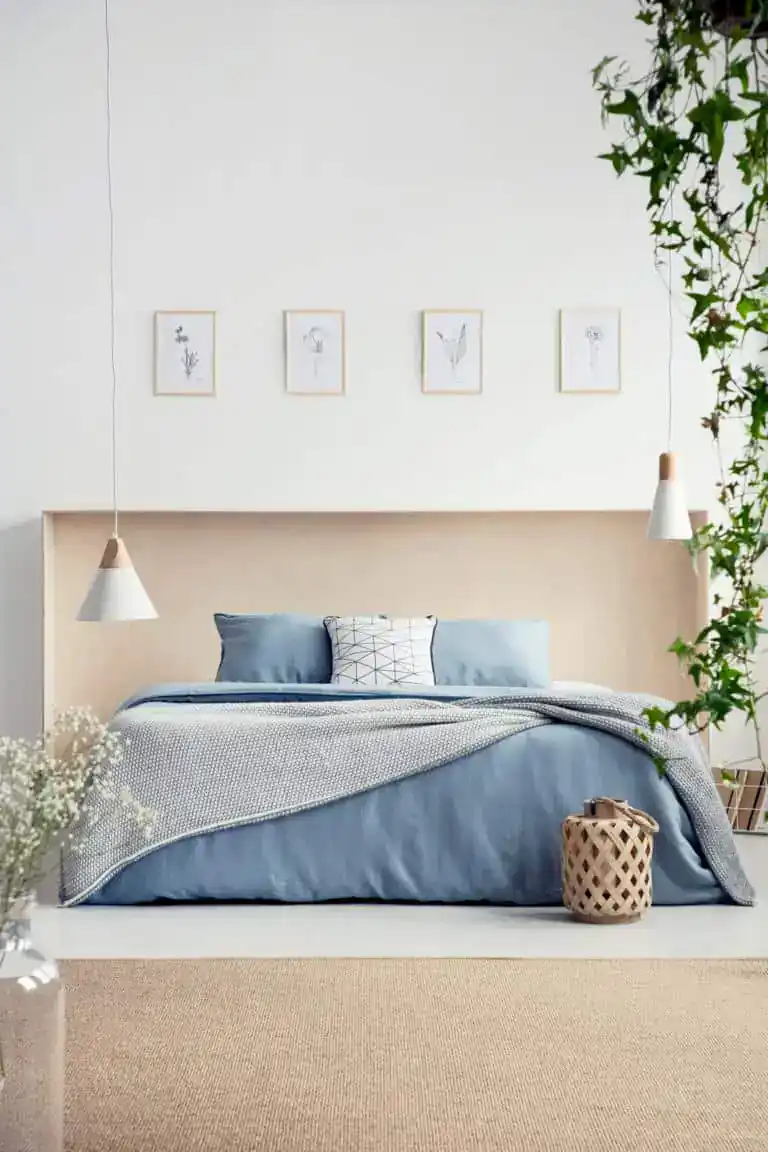
Soft colors: Use calm, neutral shades like sand or pastel.
Reduce electrosmog: Remove electronic devices from the bedroom.
Darkness: Ensure good blackout conditions for better sleep.
Discreet plants: A few plants promote harmony, too many are disruptive.
Fresh air & scents: Ventilation and calming scents like lavender support relaxation.
My own journey to healthy sleep
In almost every second health magazine, the topic of sleep disorders is discussed. When reading such articles, I am reminded of my own situation before I became a Feng Shui Master. I too suffered from sleep problems until I realised that I was not the problem, but the room.
My daughter was the trigger at the time. She never wanted to sleep in her own bed, preferring to sleep with us or on the couch. Only with the knowledge of Feng Shui did I understand: it was the bed position, the energy of the room not her personality.
For me as well, lack of sleep was a trigger for many health-related problems. Today, I love my bed. I sleep deeply, restfully, and regeneratively and that is exactly what I wish for you too.
Clarity in the bedroom: The first step
The most important principle in Feng Shui is: creating space and gaining clarity.
In many Feng Shui bedrooms, there is still work material, a desk, an ironing board, a vacuum cleaner, or moving boxes. But a Feng Shui bedroom should not be a storage room, it should be your oasis of regeneration.
Clear away what burdens you, externally as well as internally.
Ironing board, vacuum cleaner, boxes, stacks of papers: out of the bedroom!
Use closed cabinets. Avoid open shelving.
Never place shelves or heavy pictures above your bed, they create unconscious pressure.
Order and Storage
The area behind the headboard should also not be used for storage. Objects placed there can create the feeling that something is “on your neck”—and that drains energy.
Wardrobes and dressers with closed fronts create calm.
Surfaces should be simple, not playful or cluttered.
At night: close drawers, wardrobe doors, and the bedroom door.
The clearer the structure of the room, the clearer your mind will become.
NOW AVAILABLE AS A BOOK
Discover the Feng Shui Excellence Method

Discover timeless secrets for a harmonious life. In A Journey to the Roots of Authentic Feng Shui. For more energy, balance, and success.
Avoiding electrosmog in the Feng Shui bedroom
Electromagnetic smog is often underestimated, not only in the Feng Shui office – but especially in the Feng Shui bedroom. It is an invisible disruptive factor that can significantly affect your nightly regeneration.
Many electrical devices, such as alarm clockss, Wi-Fi routers, cordless phones, or lamps with transformers, generate electromagnetic fields that activate your nervous system even while you sleep. This has consequences: you sleep more restlessly, wake up more often, and feel exhausted in the morning.
For me as well, lack of sleep was a trigger for many health-related problems. Today, I love my bed. I sleep deeply, restfully, and regeneratively and that is exactly what I wish for you too.
Typical sources of electrosmog in a Feng Shui bedroom:
Power strips under the bed
Radio alarm clock directly on the head
Mobile phones on the bedside table
Lamps with transformers or dimmers
Wi-Fi router near the bedroom
Extension cables or unshielded power lines
My tip:
Have an electrician install a mains disconnect switch – this automatically cuts off the power supply as soon as the light is switched off. This way you can be sure that you sleep in an electrosmog-free room at night.
What does science say?
Studies show that electrosmog can disrupt biological processes. A study from the University of Mainz (2019) suggests that electromagnetic fields can inhibit the release of the sleep hormone melatonin – thus disrupting the natural sleep-wake cycle. Further studies, such as one from the Federal Office for Radiation Protection, urge caution, especially with prolonged exposure at night.

The Right Bed Position in the Feng Shui Bedroom
The position of your bed plays a central role in the Feng Shui bedroom. The correct alignment and placement can be decisive in whether you sleep peacefully or feel subconsciously disturbed while sleeping.
The bed should be placed with the headboard against a solid wall. This wall gives you support—both physically and energetically. Also make sure that you can see the door from the bed. You should have it in view, but it should not be directly opposite you. This so-called command position conveys a sense of safety and calm to the subconscious.
For double beds, a continuous headboard is particularly important. Two separate headboards can symbolise separation and distance—both on a physical and an emotional level.
Your sleeping position becomes even more effective when you also calculate your personal Gua number. Depending on your date of birth, there are certain directions that are especially supportive for you. Align your bed so that the crown of your head—the upper part of your head—points toward one of your favourable directions. Many of my clients report that they were able to sleep noticeably better after just a few days.
This was also the case for Alexandra, who wrote to me:
“After aligning my bed according to my Gua number, I slept through the night for the first time in years. I truly wake up feeling refreshed in the morning.”
Summary:
The bed should be placed with the headboard against a solid wall.
You should be able to see the door—but it should not be directly opposite you.
Avoid positioning the bed between a window and a door—energy flows too strongly through this area.
A canopy bed can help if you are unable to implement an ideal bed position. Especially important: avoid two separate headboards for double beds—they symbolise separation.
Learn more about the Feng Shui training
Are you interested in becoming a Feng Shui consultant yourself? In my popular training programme, you will learn everything you need to provide qualified Feng Shui consultations and potentially earn your living from it.
Darkness in the Feng Shui Bedroom: Supporting Melatonin, Deepening Sleep
In a truly dark room, your body produces melatonin, a hormone that regulates the sleep–wake rhythm and regenerates cells. This natural hormone is only produced when you are not disturbed by artificial light.
In a truly dark room, your body produces melatonin, a hormone that regulates the sleep–wake rhythm and regenerates cells. This natural hormone is only produced when you are not disturbed by artificial light.
My tip: Try it for a few nights—completely without any light sources. You will notice how much deeper and calmer your sleep can become. Feng Shui is often very simple—but always effective.
| Topic | Statistic |
|---|---|
| Age-related decline | Approx. 40–60% less after ages 25–40, up to 10 times less in old age |
| Sleep disorders | +66% among people aged 35–65 since 2010, 80% of working adults affected |
| DSPD (Delayed Sleep Phase Disorder) | 0.1–0.17% of the total population, up to 8% among adolescents |
| Neuropsychiatric groups | Melatonin deficiency in ASD, depression, anxiety disorders |
Avoid Mirrors in the Feng Shui Bedroom
Mirrors are powerful energetic elements, but in the Feng Shui bedroom, they usually have no place. Why? They reflect Qi and bring restlessness into a room that is meant to provide recovery and rest.
A mirror that reflects the bed activates Yang, the active energy. This prevents you from truly relaxing deeply.

What you should pay attention to:
No mirror opposite the bed
No mirrored wardrobe doors that reflect the bed
Also avoid glass surfaces or reflective decorations
If a mirror cannot be removed: cover it with a cloth at night
Your subconscious perceives every movement in a mirror—even while you sleep. The result: you sleep more restlessly.
Are you already familiar with the sleep study?
Between September and October 2024, 2,000 men and women aged 18 and over were selected for a representative online survey based on age, gender, and federal state.
The study provides valuable insights into sleep habits in Germany and also shows the influence that partnerships and professional life have on sleep behaviour.
Identifying Unfavourable Neighbouring Rooms
What is located outside your Feng Shui bedroom also has an influence on your recovery and rest.
Rooms that can have a negative impact:
Garage directly underneath: Vehicles generate strong Yang energy.
Kitchen in close proximity: Cooking and practical work take place here—active energy and fire risk.
Bathroom on the wall behind the bed: Moisture and water noises can be disruptive; the toilet in particular is considered the so-called place of “unfavourable breath.”
If you cannot make structural changes:
Separate rooms with doors, especially from the bathroom
Use sound-absorbing materials (e.g. curtains, carpets)
A Feng Shui bedroom works not only through the room itself, but also through what surrounds it.

Colours in the Feng Shui Bedroom
Colours have a direct effect on your psyche and your sleep. In a Feng Shui bedroom, they should above all do one thing: calm.
Proven colours for your bedroom:
Soft natural tones: beige, sand, cream
Pastel colours: rose, lilac, sage green, sky blue
Warming accents: dusty rose, terracotta, ochre
What you should avoid:
Pure white – feels cold and removes a sense of security
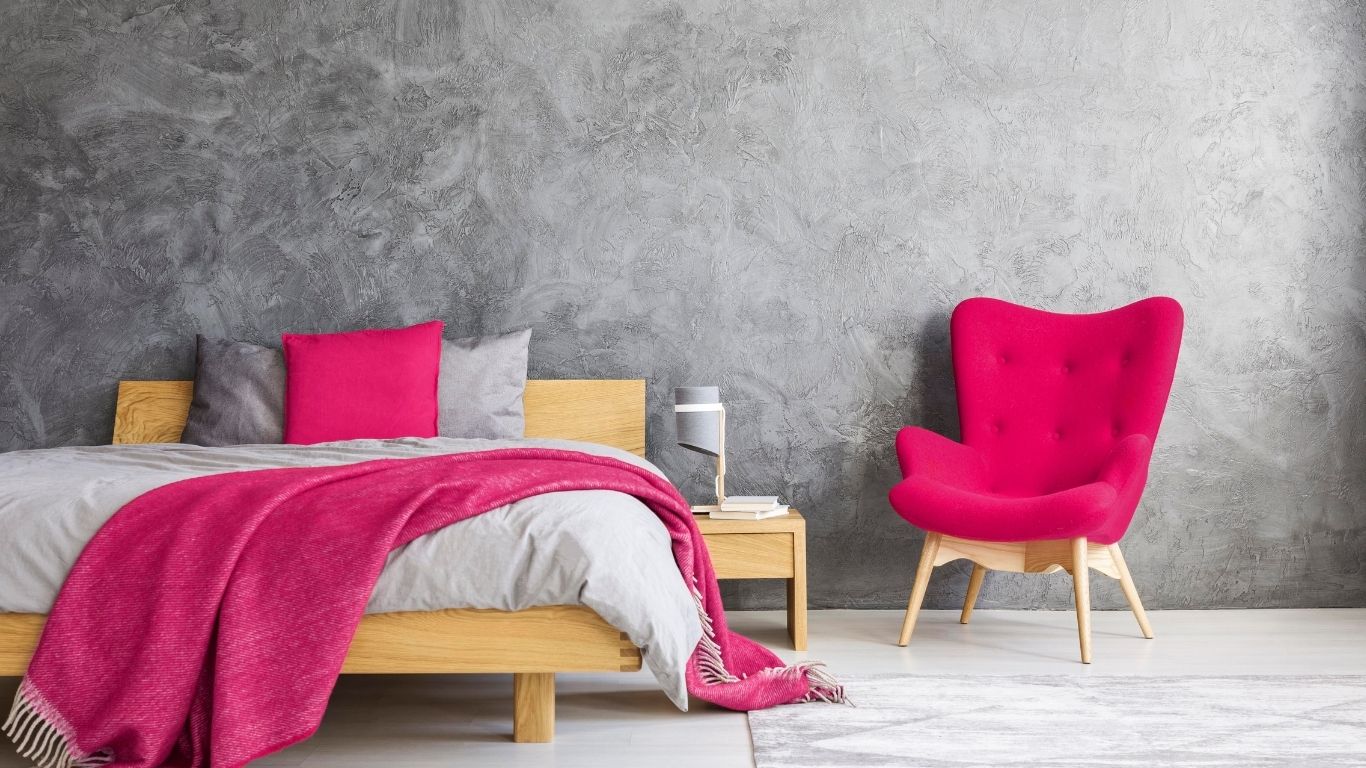
Bright colours such as red, orange, neon green – too activating
Proven colours for your bedroom:
| Direction | Recommended Colors |
|---|---|
| North | Blue, turquoise |
| South | Red, brick orange (sparingly) |
| East & Southeast | Green, apple green |
| West & Northwest | White, light grey, silver |
| Southwest & Northeast | Yellow, ochre, earth tones |
Colours have a direct effect on your psyche and your sleep. In a Feng Shui bedroom, they should above all do one thing: calm.
Colours and Their Effect in the Feng Shui Bedroom
Colours influence our subconscious far more strongly than we often realise. Each colour carries a specific vibration and in the Feng Shui bedroom, this vibration can either promote calm and a sense of security or create restlessness and activity.
Below you will find an overview of typical colours, their symbolic meaning according to Feng Shui, and their suitability for the bedroom:
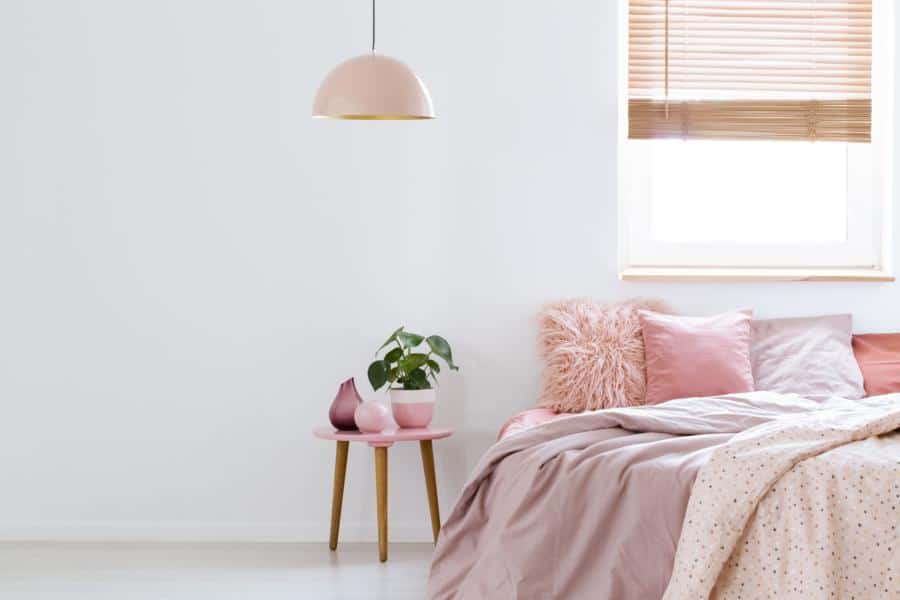
| Color | Meaning according to Feng Shui | Recommendation for the Feng Shui Bedroom |
|---|---|---|
| Blue | Creativity, freedom, peace, mental openness | Soft blue is well suited; calming and clarifying |
| Green | Life, growth, harmony, health | Ideal for east- and southeast-facing bedrooms; brings freshness and balance |
| Yellow | Wisdom, light, energy, clarity | Gentle tones such as vanilla or cream feel friendly and warm |
| White | Development, clarity, purity | Warm white is suitable; avoid overly bright white |
| Black | Elegance, depth, retreat, but also mourning and heaviness | Use only in small accents; otherwise too oppressive |
| Red | Attention, strength, love, activity | Very strong, use only very sparingly in the Feng Shui bedroom |
| Violet | Spirituality, transformation, concentration, passion | Can be inspiring but also unsettling, use sparingly |
| Brown | Calm, grounding, reliability | Earthy tones such as taupe or hazelnut convey stability |
| Orange | Joy, zest for life, drive, wisdom | Too activating, generally avoid in the Feng Shui bedroom |
Feng Shui Consultation
Get more success and improve your quality of life with a professional Feng Shui consultation.
Materials and Mattress: The Bed as an Energy Centre
Your bed is the centre of your Feng Shui bedroom, it determines your regeneration.
What you should pay attention to:
Metal-free beds: Avoid metal frames or spring mattresses—they conduct electromagnetic fields
Natural materials: Solid wood, cotton, natural latex, coconut fibre, or sheep’s wool
No mirrors or glass surfaces on the bed
The right mattress:
No spring core – metal amplifies electrosmog
Better options: natural latex, cold foam, futon
Turn your mattress regularly – this maintains energy quality
A good bed gives you support—in the truest sense of the word. Also pay attention to a solid, upholstered headboard. It symbolises protection, security, and emotional stability.
My tip: Try out your bed consciously. How do you feel when lying down? Are there pressure points? Do you feel safe and supported? Tune in to your body.
The Influence of Scent and Fresh Air
An often underestimated aspect of the Feng Shui bedroom is scent. Pleasant, natural aromas have a calming effect, release tension, and improve sleep quality.
Particularly proven scents include:
Lavender – calming, anxiety-reducing, sleep-promoting
Cedarwood – grounding and protective
Rose – harmonising and heart-opening
It is best to use pure essential oils in a diffuser or on a fragrance stone. Important to remember: less is more scents that are too intense can create restlessness instead.
Regular ventilation is also essential. At least twice a day, you should let fresh air into the bedroom—ideally in the morning and in the evening. Fresh air brings fresh Qi—and this is the foundation for restorative sleep.
Plants in the Feng Shui Bedroom
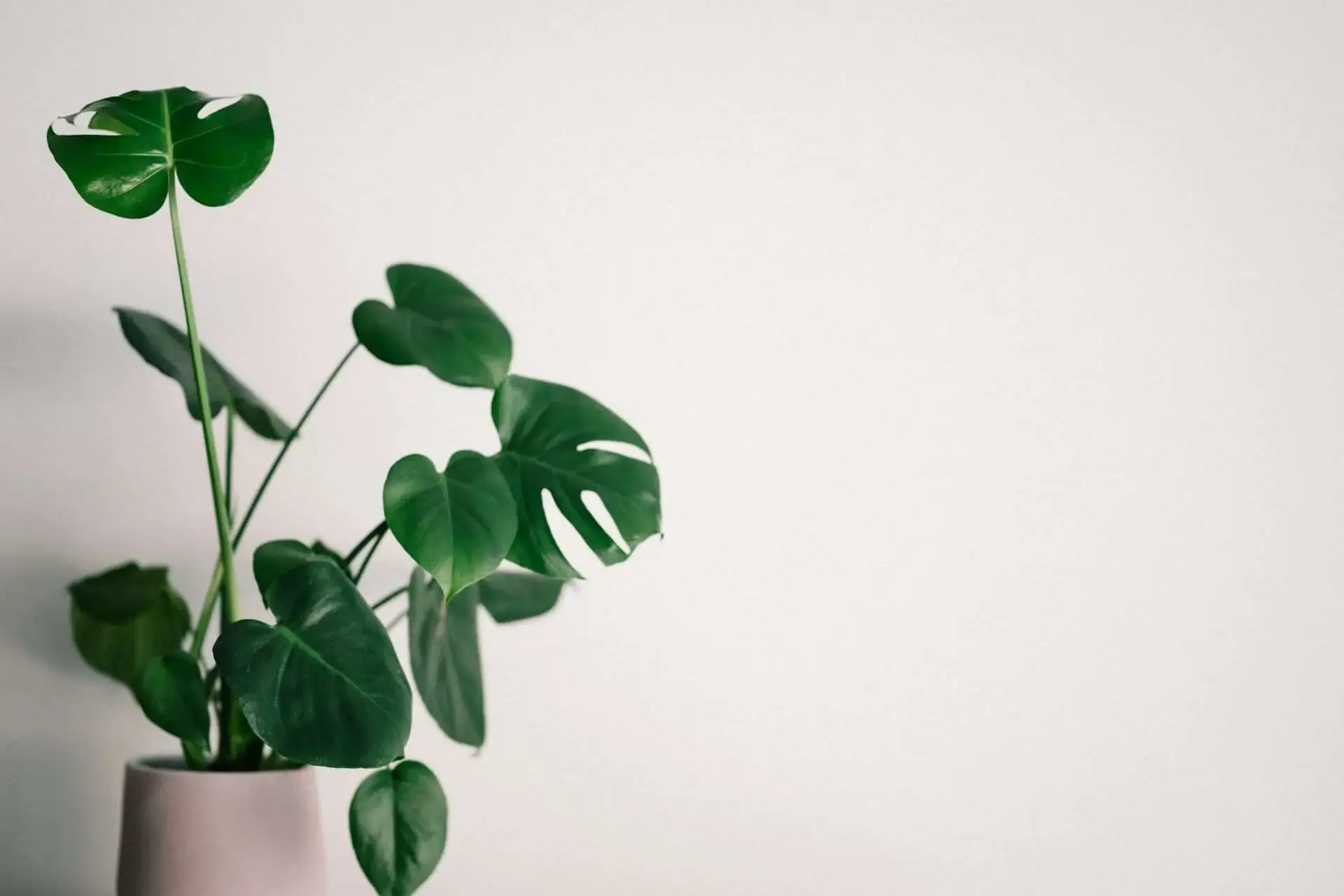
Plants can improve the indoor climate, but they must be used consciously.
It is often claimed that plants consume too much oxygen at night and could therefore negatively affect sleep. However, from a scientific perspective, this effect is negligible. In fact, the oxygen consumption of plants at night due to cellular respiration is extremely low and by no means sufficient to impair your sleep.
Nevertheless, in the Feng Shui bedroom the rule applies: less is more. Large potted plants or those with sharp-edged leaves (e.g. yucca or cacti) should be avoided, as they emit a more active, restless energy. Instead, plants with soft, rounded leaves are recommended, they promote harmony and improve the room’s atmosphere.
Make sure to place plants as far away from the headboard as possible and allow fresh air into the room regularly. This helps create an environment that supports rest and health.
Suitable plants for the Feng Shui bedroom:
Jasmine – calming and relaxing
English ivy – air-purifying and robust
ZZ plant (Zamioculcas) – low-maintenance and revitalising
Money tree (Crassula ovata) – symbol of prosperity
Summary:
No large potted plants directly next to the bed
No plants with pointed, sharp-edged leaves (e.g. yucca, cacti)
Prefer small plants with rounded leaves that radiate harmony
Place plants as close to the window as possible, this is where they receive light and are energetically best positioned. Avoid placing them too close to the headboard.
Decoration and Pictures in the Feng Shui Bedroom
Less is more, this applies especially to Feng Shui decoration in the Feng Shui bedroom. At the same time, you should surround yourself with motifs that do you good and touch your heart.
What works well:
Soft shapes in accessories—e.g. round vases, harmonious fabrics
Personal photos that radiate happiness and love (not too many)
Pictures with natural motifs (flowers, water, wide landscapes)
What you should avoid:
Images with aggressive symbolism (e.g. conflict, storms, separation)
Overloaded collages or too many decorative objects
Sharp-edged, pointed, or gloomy objects
Your Feng Shui decoration reflects your inner world. When you design your surroundings with loving, peaceful elements, an atmosphere is created in which you can truly let go, night after night.


Feng Shui in the Children’s Room
Does your child sleep poorly? Then it’s worth taking a closer look at the Feng Shui children’s bedroom. Children often sense subtle energetic differences much more intensely than adults, they intuitively know where they can sleep well.
I remember well the time when my daughter was still very young. Night after night, I had to get up because she cried and could not settle down. Only after I redesigned the children’s bedroom according to Feng Shui principles did things change. Suddenly, she slept through the night and during that time even recovered from a serious illness. This experience became a key moment on my path to becoming a Feng Shui Master.
In general, the same rules apply in the Feng Shui children’s bedroom as in an adult bedroom:
A clearly structured room that conveys a sense of safety and security
The bed placed with the headboard against a solid wall
No sleeping place between door and window
No mirrors that reflect the bed
Reduction of electrosmog, especially important for children
A particularly critical aspect in the Feng Shui children’s bedroom is the use of baby monitors. Even though many models today are labelled as “low radiation,” they often still generate strong electrical fields. These are not always immediately measurable, but they can significantly affect a baby’s sensitive nervous system. Therefore, my advice is: if possible, avoid baby monitors or consciously choose a device with DECT-free technology and minimal wireless transmission.
It is also important that no toys, mobiles, or wind chimes hang above the child’s bed. What is often considered decorative can unconsciously feel threatening or unsettling to a child, especially when falling asleep. Children perceive movement above the bed much more intensely than we adults do.
Ventilate the Feng Shui children’s bedroom regularly, pay attention to subtle, calming colours and natural materials. Gentle scents such as lavender or chamomile can also help create a relaxed atmosphere in which your child can come to rest.
A harmonious Feng Shui children’s bedroom creates safety, security, and a calm place of retreat. It is a gift to your child and to you.
Share this article with people who want to consciously guide their energy and are interested in genuine Feng Shui depth, especially those with sleep problems.
Feel free to write me your questions in the comments!
Your Feng Shui Petra
FAQ
Questions and Answers
Every person has certain cardinal directions that suit them particularly well. According to Feng Shui, the crown of the head should be aligned in a favourable direction while sleeping
The best-known method for this is the “8 Mansions Feng Shui” system. With this method, an individual’s favourable directions are calculated based on their date of birth.
In authentic, classical Feng Shui, time-related Qi qualities are also taken into account, as both the house and the person are influenced by the progression of time.
Chinese astrology and the associated favourable elements can also be included when choosing the ideal sleeping position.
In Feng Shui, there are universal principles known as the Form School. This approach focuses on finding a protected position for the bed. Positions between the door and the window should be avoided. Ideally, the headboard of the bed should be placed against a solid wall, and no heavy objects should be mounted above the bed.
Depending on individual type and personal preference, colours can be chosen specifically for each person’s bedroom.
It also matters where in the house the bedroom is located. Bedrooms should be positioned in a quiet area, preferably towards the rear of the house, to reduce noise.
According to Feng Shui, a dark bedroom is preferable, as it stimulates the production of melatonin. Melatonin, which is produced in the pineal gland, supports regeneration and restful, calm sleep.
In an ideal Feng Shui bedroom, the bed should be positioned with the headboard against a solid wall.
If the bed is placed under a window or stands freely in the room, this can create restlessness and lead to sleep problems. It is also important to avoid placing the bed against a wall that is shared with a bathroom or toilet.
Fuse boxes, freezers, and any electrical devices should be positioned as far away from the bed as possible.
Every person is unique. Based on birth data, the most favourable directions can be assessed individually. Classical, authentic Feng Shui evaluates the best sleeping direction for each person on a personal basis.
For this reason, no general recommendation can be given, as many different factors contribute to healthy and restorative sleep.
The direction of the crown of the head should first and foremost be in a protected position. Ideally, the sleeper should have both the door and the window within their field of view.
A solid wall behind the headboard is always a basic requirement for restful sleep. The optimal head direction can also be assessed using classical Feng Shui methods, most commonly the 8 Mansions system combined with the time-related qualities of Feng Shui. Each person is assessed individually in order to activate their personal energy qualities.
In Feng Shui, every bedroom has its own energetic quality, known as Qi. These factors form the basis for recommendations regarding the ideal colour selection for a Feng Shui bedroom.
As a general rule, soft, gentle tones should be chosen for small or dark rooms. The larger the room, the more intense the colour palette can be.
Choosing artwork for a Feng Shui bedroom should be done with great care, as images affect the subconscious and stimulate the soul.
Positive, uplifting motifs are preferred. Dark, sad, or aggressive images should be avoided. Family photos, pictures of children, and ancestors are better placed elsewhere in the home. Images of couples, weddings, or people in love can support relationship harmony.
Reflective or mirrored surfaces should be avoided when selecting pictures.
Every sleeper has a natural need for protection. Our primal instinct seeks a sense of safety in order to fully relax into sleep. A window can also introduce draughts and light, both of which may disturb sleep.
If the man is lying on his back, he traditionally prefers his partner to sleep on his right side. The woman’s heart side then faces towards her partner.
In same-sex relationships, the more Yang-oriented partner traditionally assumes the masculine role, while the partner with more Yin qualities corresponds to the feminine role. Yang qualities are more expressive, impulsive, communicative, and dominant, while Yin qualities are softer, more reserved, sensitive, and receptive.
Sign up for our newsletter.
Sign up for our newsletter and receive your first Feng Shui lesson completely free right away.